


Storing Compressed Gas Cylinders: Horizontal vs. Vertical
Oct 23, 2024
Leave a message
I. Introduction
Compressed gas cylinders are commonly used in a variety of industries, laboratories, and even some home applications. For safety reasons, it is critical to store these cylinders properly. An important question that often arises is whether compressed gas cylinders can be stored horizontally.
II. General Rules: Vertical Storage
1. Stability
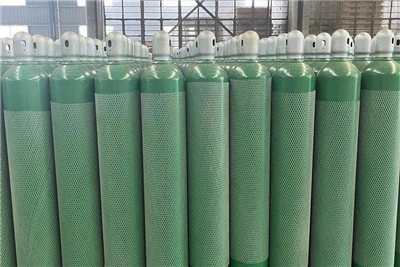
- In most cases, compressed gas cylinders are designed to be stored vertically. Vertical storage provides better stability. When a cylinder is stored vertically, its center of gravity is properly aligned, which reduces the risk of it tipping over. For example, a tall, slender oxygen cylinder is more likely to remain stable when upright. If stored horizontally, even a slight disturbance may cause it to roll and potentially damage valves or other components.
2. Valve Protection
- The valve on a compressed gas cylinder is a critical component. When stored vertically, the valve is less likely to be damaged. In a horizontal position, there is a greater chance of debris or other objects coming into contact with the valve. In addition, if there is any leakage in the valve, in a vertical position, the gas is more likely to dissipate upward, away from potential ignition sources, while in a horizontal position, the gas may be more likely to spread in different directions.
3. Situations where horizontal storage might be considered
1. Space constraints
- In some confined spaces, it may seem tempting to store cylinders horizontally to save space. However, this should be done only as a last resort and with extreme caution. For example, in a small storage room where vertical storage racks cannot be installed due to lack of space, some companies may consider horizontal storage. But they must ensure that the cylinders are properly secured to prevent rolling and that the valves are protected from damage and contamination.
2. Special cylinder designs
- There are some specialized compressed gas cylinders designed to be stored horizontally. These cylinders often have different valve positions and internal structures compared to standard vertically stored cylinders. For example, certain types of mixed gases used in specific industrial processes may be packed in cylinders that can be stored horizontally. But for these specialized cylinders, the manufacturer's instructions must be strictly followed.
4. Safety precautions for horizontal storage
1. Securing cylinders
- If horizontal storage cannot be avoided, the cylinders must be securely secured. This can be done using specially designed racks or straps. The cylinders should not be able to move or roll freely. For example, in a laboratory setting, if a small-scale experiment requires short-term horizontal storage of a particular cylinder, it should be placed in a custom-made stand to hold it in place.
2. Valve Inspection and Protection
- Before and during horizontal storage, valves should be carefully inspected for any signs of damage or leakage. Protective covers can be placed on valves to prevent the ingress of debris or moisture. If any leaks are found, the cylinder should be removed from storage immediately and appropriate safety procedures should be followed, such as ventilation and notifying the relevant authorities.
V. Conclusion
In general, compressed gas cylinders are best stored vertically for reasons of stability and valve protection. However, in certain limited circumstances, horizontal storage may be considered, but strict safety precautions must be taken. Whether storing vertically or horizontally, compliance with safety regulations and manufacturer's instructions is essential to prevent accidents and ensure safe operation of compressed gas cylinders.